-

This satellite will deliver twice the capability of the current constellation
The 11th Wideband Global SATCOM satellite will be able to use beam forming and other commercial technology to deliver more capability to the war fighter.
-
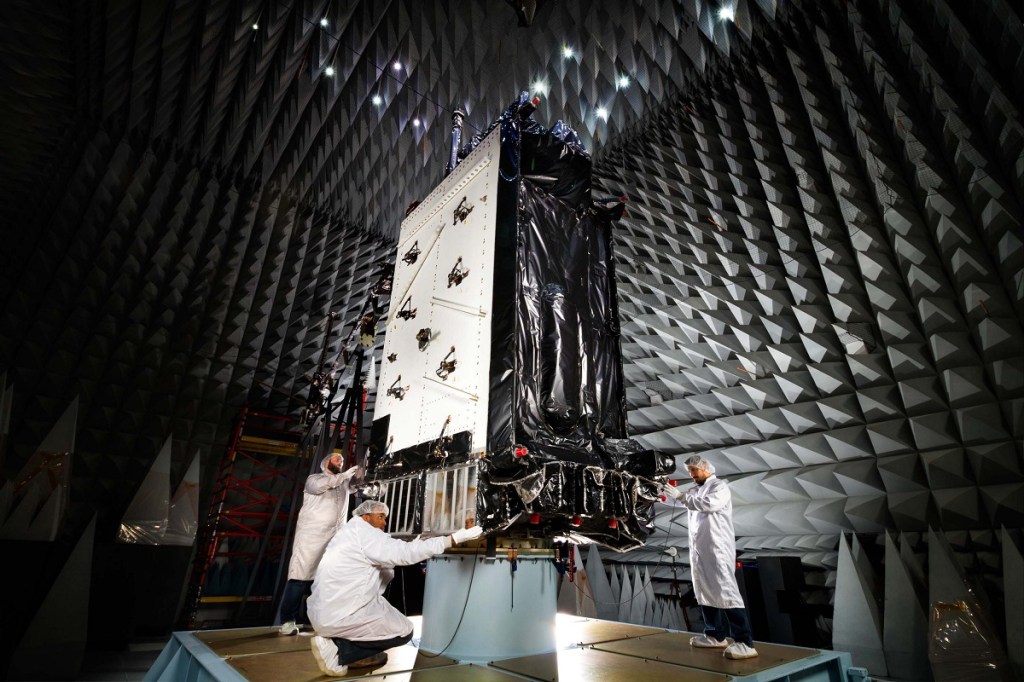
More than a test bed: How an experimental satellite will help the war fighter
Run by the Air Force Research Laboratory, the NTS program launches experimental satellites that test future GPS technology, allowing the military to ensure that future space vehicles have the most advanced technology. NTS-3, the third iteration of this concept, is slated for launch in 2022.
-
What the Pentagon needs before it makes a decision on satellite communications
A new Government Accountability Office report provides a few clues on a long awaited analysis of alternatives for the Air Force’s Wideband Global SATCOM satellites.
-

Inmarsat bets the Pentagon needs more bandwidth in the Middle East
Responding to increased demand for commercial satellite communications in the Middle East and Europe, Inmarsat is dedicating it’s newest satellite to serving military and commercial customers in that region.
-

Companies gear up for next phase in Britain’s Skynet 6 program
The British government has ruled that all bidders, except one, must remain unnamed.
-

The Air Force will need terminals that work with more than GPS
A provision in the annual defense policy bill calls on the Air Force to develop a prototype receiver capable of utilizing foreign GNSS, such as the European Union’s Galileo or Japan’s QZSS satellites.
-

Congress wants more clarity on space-based missile warning
With multiple agencies and services developing overhead persistent infrared sensors in space for missile tracking, lawmakers want to see a plan on how the Department of Defense will integrate those efforts and avoid duplication.
-

NATO declares space ‘operational domain,’ but more work remains
NATO must take tangible and urgent collective action to secure the ultimate high ground — space.
-

What’s Congress’ end game for unified space acquisitions?
While the compromise defense authorization bill would move the Space Development Agency under the new Space Force, it leaves a lot of open questions when it comes to reforming space acquisitions.
-
Congress backs off push for space-based missile intercept layer
A space-based missile defense intercept layer takes a back seat to a sensor constellation in the conference report for Congress’ FY20 defense policy bill.
-
This satellite will deliver twice the capability of the current constellation
The 11th Wideband Global SATCOM satellite will be able to use beam forming and other commercial technology to deliver more capability to the war fighter.
-
More than a test bed: How an experimental satellite will help the war fighter
Run by the Air Force Research Laboratory, the NTS program launches experimental satellites that test future GPS technology, allowing the military to ensure that future space vehicles have the most advanced technology. NTS-3, the third iteration of this concept, is slated for launch in 2022.
-
What the Pentagon needs before it makes a decision on satellite communications
A new Government Accountability Office report provides a few clues on a long awaited analysis of alternatives for the Air Force’s Wideband Global SATCOM satellites.
-
Inmarsat bets the Pentagon needs more bandwidth in the Middle East
Responding to increased demand for commercial satellite communications in the Middle East and Europe, Inmarsat is dedicating it’s newest satellite to serving military and commercial customers in that region.
-
Companies gear up for next phase in Britain’s Skynet 6 program
The British government has ruled that all bidders, except one, must remain unnamed.
-
The Air Force will need terminals that work with more than GPS
A provision in the annual defense policy bill calls on the Air Force to develop a prototype receiver capable of utilizing foreign GNSS, such as the European Union’s Galileo or Japan’s QZSS satellites.
-
Congress wants more clarity on space-based missile warning
With multiple agencies and services developing overhead persistent infrared sensors in space for missile tracking, lawmakers want to see a plan on how the Department of Defense will integrate those efforts and avoid duplication.
-
NATO declares space ‘operational domain,’ but more work remains
NATO must take tangible and urgent collective action to secure the ultimate high ground — space.
-
What’s Congress’ end game for unified space acquisitions?
While the compromise defense authorization bill would move the Space Development Agency under the new Space Force, it leaves a lot of open questions when it comes to reforming space acquisitions.
-
Congress backs off push for space-based missile intercept layer
A space-based missile defense intercept layer takes a back seat to a sensor constellation in the conference report for Congress’ FY20 defense policy bill.