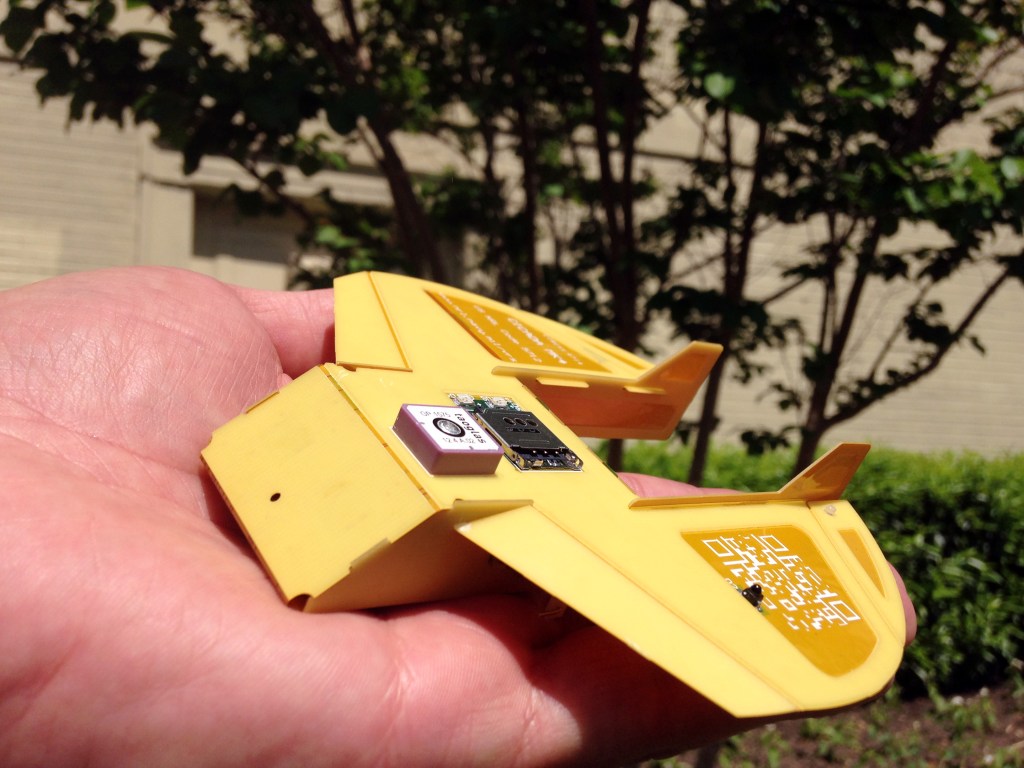
The Naval Research Lab has exhibited a “micro air vehicle” developed to glide to programmed GPS coordinates after being dropped into a mission’s vicinity, according to an Agence France-Presse report.
Known as the “Cicada,” short for Covert Autonomous Disposable Aircraft, the palm-sized, motorless UAV can travel silently at speeds near 50 miles per hour. Released from an aircraft or balloon in swarms, the Cicada is designed to be a hard-to-pinpoint monitor that has been called a “robotic carrier pigeon” by Daniel Edwards, an aerospace engineer at the Naval Research Laboratory. Tests have placed the Cicada within 15 feet of its target, allowing for precisely placed data broadcasts.
Applications for the Cicada include using embedded sensors to monitor everything from weather conditions to road conditions and the presence of large metallic vehicles, and microphones could equip them to eavesdrop.
Durable and inexpensive ($1,000 to prototype, as potentially as low as $250 each to mass produce), the Cicada has garnered interest from many government agencies.